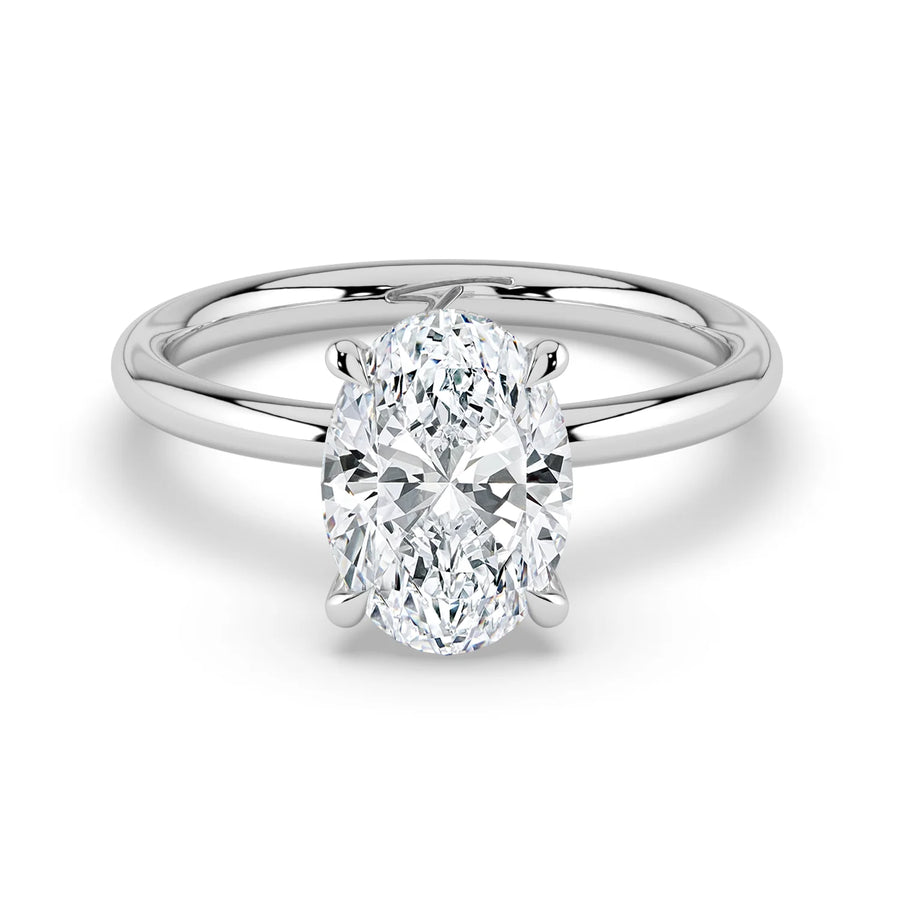


Engagement rings, wedding bands, and eternity rings each carry their own symbolism, but when worn together, the order and arrangement become part of the story. Whether you are newly engaged, preparing for your ceremony, or adding an eternity band to mark a milestone, understanding the traditions (and the freedom to move beyond them) helps you wear your rings with confidence.
Below, we explore the traditional arrangement, modern alternatives, and answer the most common questions about how to wear and stack your rings.
The Traditional Ring Order
Traditionally, engagement and wedding rings are worn on the left-hand ring finger. The wedding band sits first, closest to the heart, with the engagement ring stacked on top.
Why this order?
The wedding band is positioned first because it represents the formal bond created during the ceremony. Its placement closest to the heart draws on the ancient Roman belief in the vena amoris, a vein said to run directly from the ring finger to the heart. While modern anatomy has moved on from this idea, the sentiment endures: the wedding band symbolises an unbroken circle of commitment, and its prime position reflects that significance.
The engagement ring, sitting above, marks the promise that preceded the vows. Together, the two rings tell the story of a relationship in sequence, promise first, then bond, and this layered meaning is why the traditional order has remained so enduring across generations.
What Happens During the Ceremony?
If you already wear your engagement ring on your left hand, most people move it to the right hand before the vows begin. This clears the ring finger so your partner can slide the wedding band into its traditional position closest to the heart. After the ceremony, you simply move the engagement ring back on top.
Some couples prefer not to wear the engagement ring during the ceremony at all, keeping the moment focused entirely on the exchange of wedding bands. Others choose to have their engagement ring temporarily reset onto the right hand by a trusted member of the bridal party. There is no single correct approach, only what feels most meaningful and comfortable for you on the day.
Modern Takes on Ring Order
Tradition offers a beautiful starting point, but it is not a rulebook. Many couples today embrace alternatives that better reflect their personal style, lifestyle, or cultural background:
- Engagement ring first, then wedding band. Some wearers simply prefer the look of their engagement ring sitting closest to the hand, particularly if the setting is lower-profile and the wedding band has more visual detail.
- Engagement ring on the right hand, wedding band on the left. This approach gives each ring its own space and can feel more balanced, especially if both rings are statement pieces.
- Rotating rings based on mood or occasion. A solitaire engagement ring may suit everyday wear, while a more detailed band takes centre stage for evenings out.
- Skipping the wedding band entirely. Some couples opt for matching alternative pieces like a bracelet, pendant, or another symbol that holds personal meaning.
Ultimately, how you choose to represent your marriage is personal, and entirely your decision. The rings belong to you; the rules are yours to write.
Choosing Metals and Settings That Stack Well
If you plan to wear multiple rings on the same finger, it is worth considering how your choices will sit together day to day. A few practical tips:
- Match or complement your metals. Rings in the same precious metal, whether platinum, white gold, yellow gold, or rose gold, create a seamless, cohesive look. Mixed metals can work beautifully too, but it helps to be intentional about the pairing.
- Consider profile and width. A slim, low-profile wedding band pairs naturally with most engagement ring settings. If your engagement ring has a higher or wider setting, look for a curved or contoured band designed to sit flush against it.
- Think about long-term wear. Rings that rub against each other over time can cause surface wear. Choosing bands with complementary profiles, or adding a slim spacer band, reduces friction and keeps each piece looking its best.
If you are unsure which combination works best, our team can help. Our Bespoke Journey includes guidance on designing rings that are made to sit perfectly together from the start.
Incorporating Eternity Bands and Building Your Stack
Eternity rings often mark milestones like an anniversary, the birth of a child, or a moment of personal significance, and they add a beautiful new dimension to an existing ring stack. There is no universal rule for how to arrange them; the beauty of a stack is that it grows and evolves with your story.
Here are some approaches to consider:
- Chronological layering. Place rings in the order they were received, with the wedding band closest to the hand, engagement ring next, and eternity band on top. This tells your story in sequence.
- Design focus. Position the ring with the most intricate or eye-catching design at the centre of the stack, creating visual balance and drawing the eye naturally.
- Practical security. Keep the most valuable or sentimental piece closest to the hand, where it sits more securely.
- Mix and match. Experiment with different metals, textures, and widths. A combination of polished, brushed, and pavé-set bands can create a modern, layered aesthetic that feels effortlessly personal.
Your stack can evolve as your story unfolds. Feel free to rearrange or add new pieces whenever the moment calls for it. There are no rules, only what feels right for you.
Frequently Asked Questions
What hand do you wear an eternity ring on?
Most people wear eternity rings on the same finger as their wedding and engagement rings, the left ring finger, stacked above both. However, some prefer the right hand for comfort, balance, or simply to give the ring its own presence. There is no fixed rule; wear it wherever it feels most natural.
What hand do you wear a wedding ring on?
In Australia and most Western cultures, the wedding ring sits on the left-hand ring finger, closest to the heart. This tradition dates back to the ancient belief in the vena amoris. In some European and South American cultures, the right hand is traditional instead.
What hand do you wear an engagement ring on?
In most Western cultures, the engagement ring is worn on the left ring finger before and after marriage, stacked above the wedding band. In some European countries, including Germany, Norway, and Russia, it is customary to wear the engagement ring on the right hand.
Can I wear my engagement ring and wedding band on different hands?
Absolutely. Wearing your engagement ring on one hand and your wedding band on the other is a popular modern choice. It gives each ring its own space and can be more comfortable, particularly if both rings have larger or more detailed settings.
Do I need a wedding band if I have an engagement ring?
Not at all. Some couples exchange only engagement rings, while others prefer alternative symbols of commitment. If you do choose a women’s wedding band or men’s wedding band, it becomes a meaningful addition, but it is never a requirement.
Should my wedding band match my engagement ring?
Matching is a matter of personal preference, not obligation. Many couples choose the same metal for a cohesive look, while others intentionally mix metals or textures for contrast. The most important thing is that both rings feel comfortable worn together and reflect your personal style.
How do I stop my rings from scratching each other?
Rings worn side by side will experience some contact over time. Choosing bands with complementary profiles helps minimise friction. A contoured or shaped band designed to nest against your engagement ring is one of the most effective solutions. Regular professional cleaning and polishing also keeps each piece looking its best for years to come.
Wear Your Rings Your Way
There is tradition, and then there is what feels right for you. Whether you follow the classic order, build an evolving stack, or create something entirely your own, the only rule that truly matters is that your rings feel meaningful and comfortable on your hand.
If you are searching for lab-grown diamond engagement rings or wedding bands designed to sit beautifully together, or if you would like guidance on building a stack that tells your story, you can Book a Virtual Consultation and speak to one of our jewellery experts.